As institutional and traditional investors increasingly explore digital assets, staking has emerged as a powerful method of earning yield in a risk-managed way. But as the industry evolves, new mechanisms like liquid staking—led by platforms such as Lido—have introduced both convenience and complexity. Understanding the differences between liquid staking and direct staking is crucial for anyone evaluating yield opportunities in Proof-of-Stake (PoS) ecosystems.
What Is Liquid Staking?
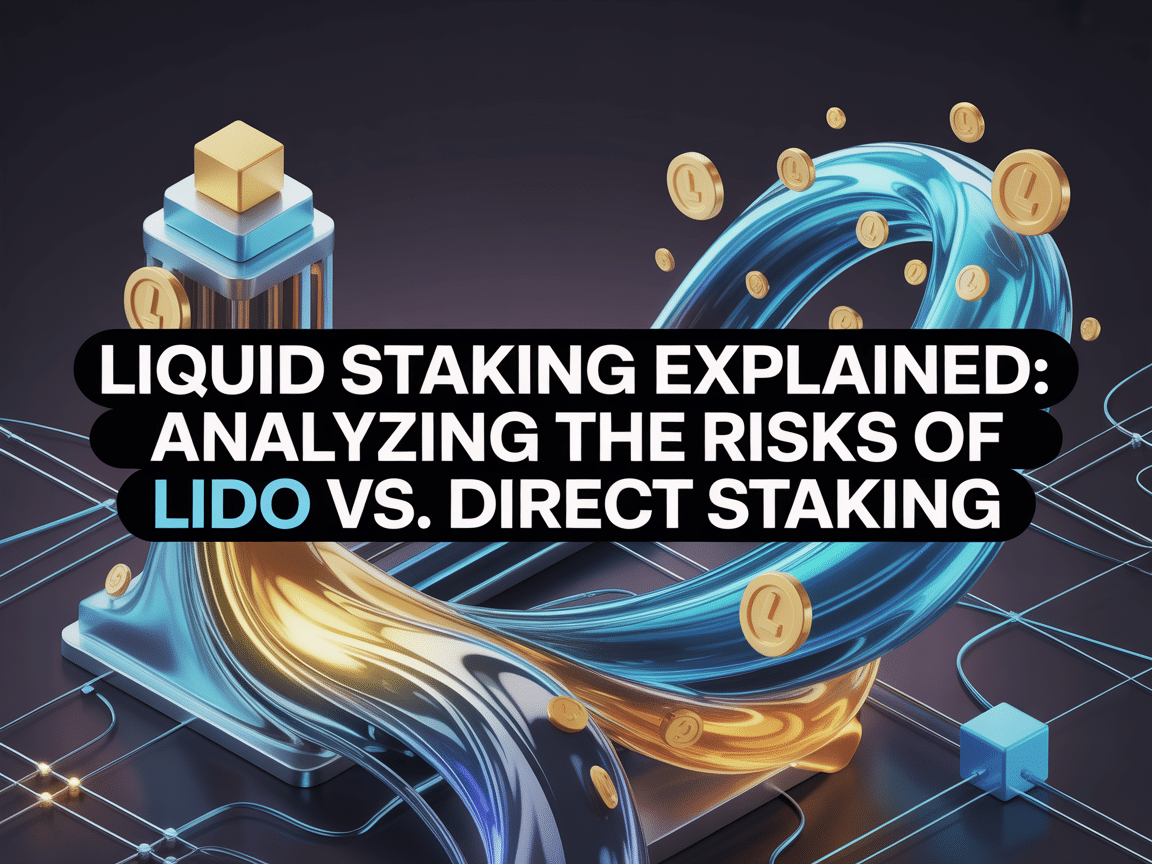
Liquid staking allows investors to stake their crypto assets while maintaining liquidity through a derivative token that represents the staked position. For instance, when you stake Ethereum (ETH) through Lido, you receive a liquid derivative called stETH. This token can then be used in decentralized finance (DeFi) applications—traded, lent, or used as collateral—while your underlying ETH remains locked in the network’s staking contract.
In essence, liquid staking seeks to solve one of the main drawbacks of traditional staking: the lock-up period. In most direct staking systems, your assets are locked for a defined duration (the “unbonding period”) during which they cannot be traded or used. Liquid staking, on the other hand, offers flexibility and composability—two features that make it particularly appealing to active investors or funds seeking to optimize capital efficiency.
Direct Staking: The Original Model
In direct staking, investors stake their assets directly on the blockchain network—either by running their own validator node or by delegating to one. For example, a Solana or Ethereum investor can use their Ledger hardware wallet or a platform like ToshiCSS to stake directly with the network. Their assets are locked within the protocol, and the investor earns rewards directly from the network based on its inflation model and validator performance.
Direct staking represents the “pure” form of staking: the investor retains full custody, visibility, and on-chain transparency over their assets. It’s the model most aligned with regulatory and risk-conscious principles, especially in light of recent SEC scrutiny over custodial staking services:contentReference[oaicite:0]{index=0}.
The Core Differences Between Liquid and Direct Staking
| Feature | Liquid Staking (e.g., Lido) | Direct Staking (e.g., via Ledger or ToshiCSS) |
|---|---|---|
| Custody | Assets are pooled and managed by the liquid staking provider. | Assets remain in your own wallet or under your direct control. |
| Liquidity | Immediate liquidity via derivative token (stETH, mSOL, etc.). | Assets are locked during the staking and unbonding periods. |
| Rewards | Yield is auto-compounded into the liquid derivative. | Rewards accrue directly to your staking address or validator. |
| Smart Contract Risk | Exposure to potential contract bugs or validator mismanagement. | Minimal—staking occurs directly at the protocol layer. |
| Regulatory Clarity | Less clear; resembles pooled investment products. | Generally compliant when non-custodial. |
The Risks of Liquid Staking
While liquid staking offers attractive liquidity and yield opportunities, it also introduces several critical risks:
- Smart Contract Risk: Liquid staking platforms like Lido depend on complex smart contracts. A vulnerability could expose investors to loss or theft.
- Custodial Concentration: When large percentages of a network’s stake are controlled by a few providers (as is the case with Lido on Ethereum), the network becomes less decentralized—potentially undermining the very principle of Proof-of-Stake.
- Regulatory Ambiguity: Because liquid staking involves pooled assets and tokenized claims, regulators may treat these products similarly to securities, adding compliance risk for U.S.-based investors.
- Depeg Risk: The derivative token (like stETH) may lose parity with the underlying asset, especially in times of market stress or liquidity crises, as seen during 2022’s DeFi contagion events.
Why Direct Staking Remains the Gold Standard for Security
Direct staking eliminates most of these concerns by interacting only with the blockchain protocol itself. There are no derivative tokens, no pooled intermediaries, and no reliance on third-party smart contracts. You know exactly where your assets are, and you earn rewards directly from the protocol.
Moreover, direct staking aligns more closely with the evolving regulatory stance in the United States. The SEC’s action against Kraken’s staking program underscored that custodial, pooled staking models are likely to be treated as unregistered securities offerings. Direct staking, by contrast, keeps control in the hands of the investor, satisfying both transparency and compliance objectives:contentReference[oaicite:1]{index=1}.
When Liquid Staking Might Make Sense
For sophisticated investors managing active strategies or seeking cross-protocol yield optimization, liquid staking can still be useful. Its liquidity enables rebalancing, hedging, and capital deployment into DeFi. However, it should be approached with the same diligence you’d apply to a complex derivative product: assess counterparty exposure, review audit reports, and size positions relative to your overall risk tolerance.
Staking Safely and Strategically With ToshiCSS
At ToshiCSS, we bridge the gap between institutional-grade infrastructure and investor autonomy. Our ISO27001-certified platform allows investors to stake directly—maintaining full asset control—while benefiting from real-time analytics, professional validator management, and advanced yield tracking.
- Full Transparency: You always know where your assets are staked and how your rewards accrue.
- Regulatory Confidence: Our staking model aligns with SEC guidance by avoiding pooled, custodial structures.
- Security-First Infrastructure: ToshiCSS operates fully owned validator nodes within secure, audited data centers.
- Built for Traditional Investors: Our educational tools demystify crypto yield opportunities and present data-driven insights tailored to serious portfolios.
For investors seeking clarity, compliance, and confidence, ToshiCSS offers the most intelligent way to engage with Proof-of-Stake networks—without compromising on control or transparency.
Final Thoughts
Liquid staking may represent the future of capital-efficient blockchain participation—but it also carries risks that must be understood, managed, and disclosed. Direct staking remains the foundational approach for investors prioritizing transparency, security, and long-term alignment with network health.
If this guide helped clarify the key distinctions, share it with your network—especially those considering yield strategies in 2025’s rapidly maturing crypto markets. This is the kind of insight that builds confidence—and confidence is the cornerstone of any sound investment strategy.
Visit ToshiCSS.com to learn more about secure, compliant, and performance-driven staking.